
Welche Shopping-App setzt 2026 die Maßstäbe im Handel?
Eure Shopping-App gehört zu den besten im Handel? Dann wird es Zeit für die offizielle Auszeichnung!
Von Ralf Haberich




/_All-Illustrations-Production_Hero-On-and-Offline.png)

Digitalization has arrived in Germany. Even if the country has the reputation of having missed the leap into the internet, over 95 percent of all people have access to high-speed internet. That's emphasized by the Federal Ministry for Economic Affairs on its homepage, where it talks about the importance of digital structures. At the latest, this fact is the final proof for retailers that their own customers have certainly been digitalizing for years and have developed corresponding expectations. So how can retailers meet these expectations while still using their existing strengths and experience to compete with pure e-commerce?


Only a few retailers already use the advantages of their existing store networks to delight customers online and offline. This way, they create a competitive disadvantage for themselves.

Those who are not where their own customers are will experience a big problem in the medium term. Therefore, retailers must not only be on-site but also understand the digital reality of their customers' lives.

Service is still extremely important for customers. At the same time, they don't want to do without the advantages of the digital world. Retailers must reconcile both.

Those who don't know and understand their customers risk losing them. Therefore, retailers must not only collect data but also process and understand it.

Especially in goods shipping, the central warehouse plays a big role for many retailers. In doing so, however, they ignore the opportunities that decentralized shipping from their stores offers.

Retailers must not only train and guide employees but also give them the right tools to succeed in daily business. But what are the right tools?

We help you realize it:



Omnichannel is not a distant vision of the future for retail — its successful introduction requires no metaverse and no technical wizardry.
Rather, omnichannel is the answer to
demands and questions that customers are already articulating today. But what is needed to effectively support retail?
One thing first: digitalization is a buzzword that has been haunting retail and our world for a long time. Many bright minds understand different things by it. But one thing is certain: those who don't engage with it will be left behind.
.png)
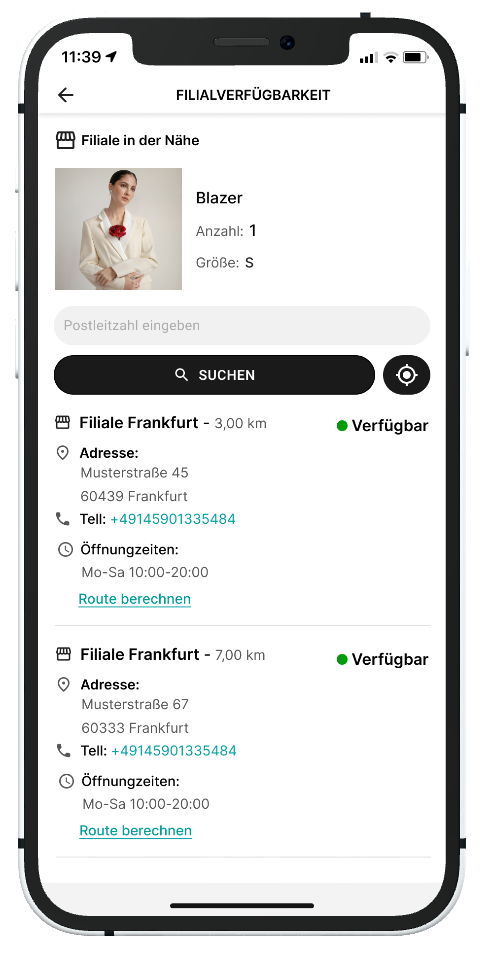
Show your customers in real time which products are available in which store and make the goods visible online. This not only reduces slow-moving inventory.
Ship goods and products directly from your stores and rely on decentralized shipping logic. This way you make effective use of your existing infrastructure and reduce the need for central warehouses.
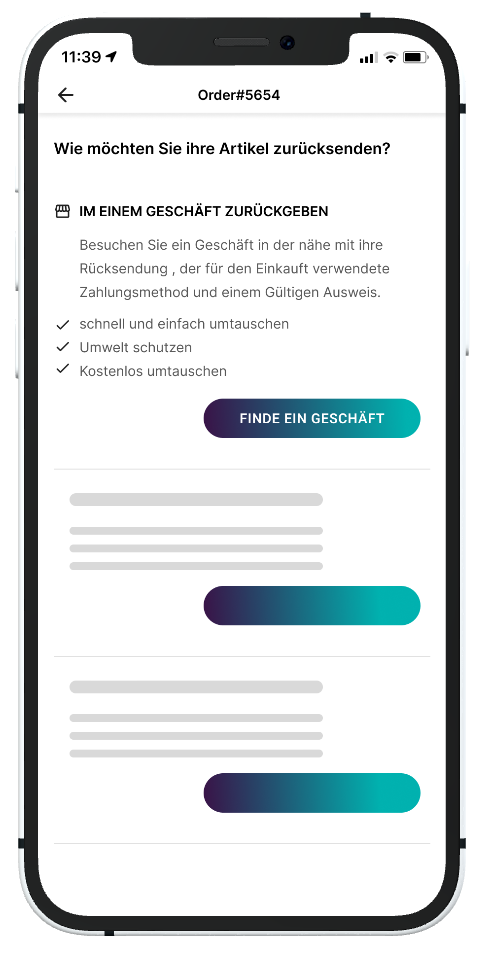
Allow your customers to drop off returns directly in the local store and thus avoid costly return shipments via parcel carriers.
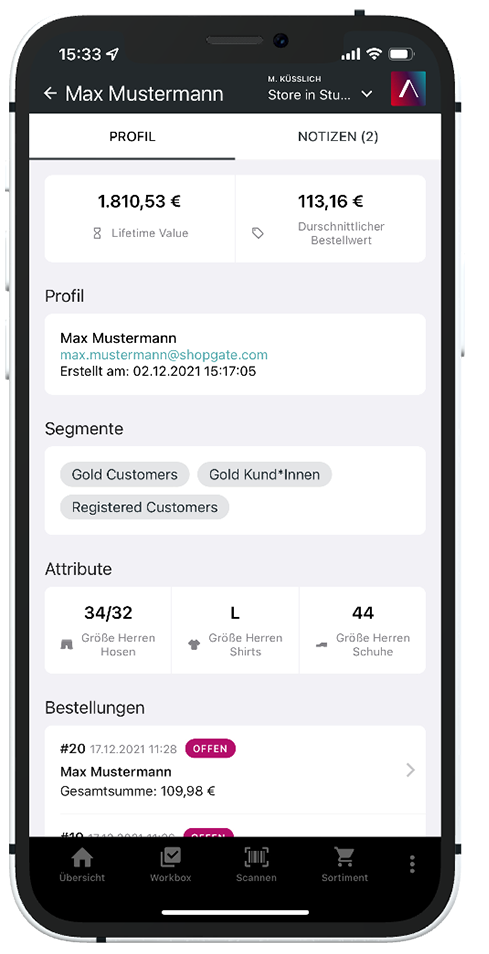
Advise your customers extensively, supported by prepared data, directly in the sales conversation. Sales staff get access to online profiles and can include past purchases in the consultation.
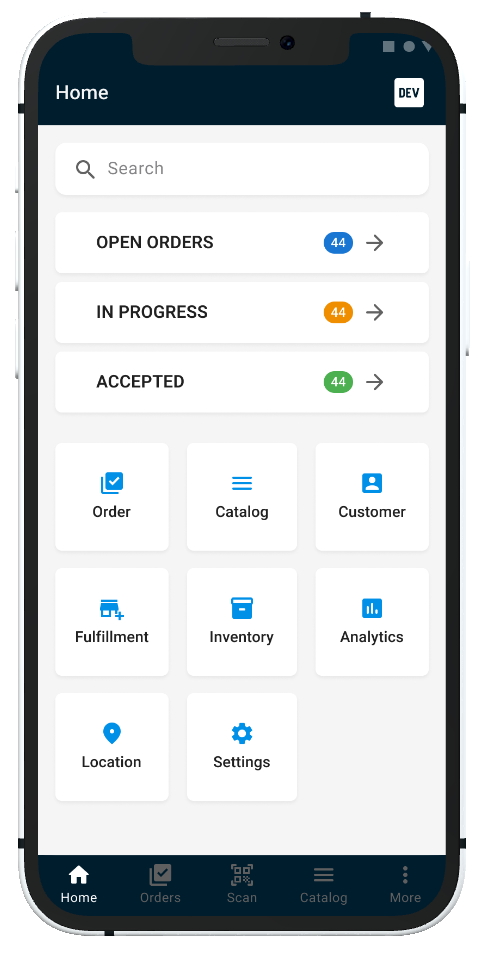
Empower your store staff to oversee and manage all processes and operations in the store with just a few gestures and clicks. So your colleagues can do what they do best.

Are retailers and customers talking about the same things when they say "digitalization"? We investigated.
.png)


Eure Shopping-App gehört zu den besten im Handel? Dann wird es Zeit für die offizielle Auszeichnung!
𝗢𝗻𝗹𝗶𝗻𝗲𝘀𝗵𝗼𝗽-𝗕𝗲𝘀𝘂𝗰𝗵𝗲𝗿 als 𝟳𝘅 𝘄𝗲𝗿𝘁𝘃𝗼𝗹𝗹𝗲𝗿𝗲 𝗞𝘂𝗻𝗱𝗲𝗻?Ein führender Experte für
Reichweite ist gelöst. Entscheidung nicht.